




Do you remember the old days of blowing into Nintendo cartridges to get them working? That was our rudimentary form of tech support.
Cartridge not loading? Blow gently. Still no luck? Blow with more force.
If that didn't suffice, you gave the console a firm tap.
Back then, we thought we were technology experts.
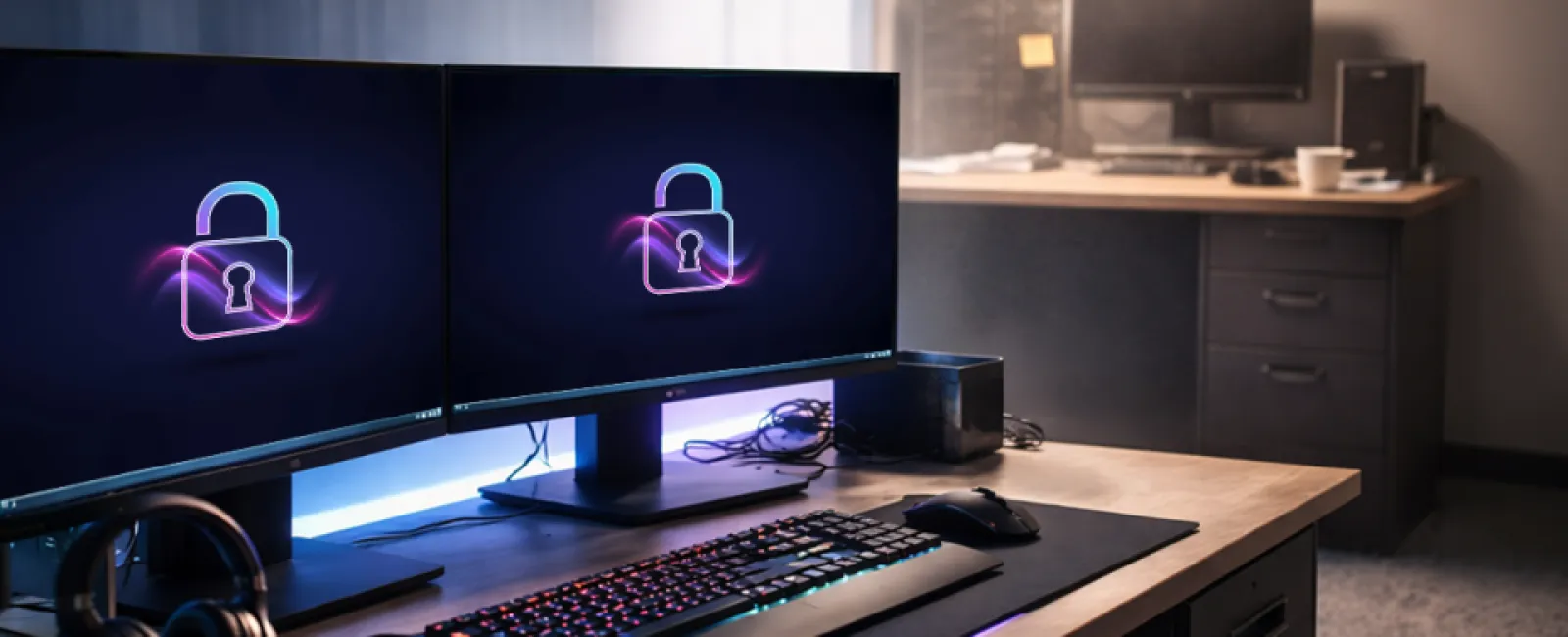
But your child? They haven't needed to rely on hitting their devices to fix them. Their gaming setup boasts a solid-state drive, 32GB of RAM, a processor capable of rendering films, mesh Wi-Fi eliminating dead zones, real-time performance tracking, and multi-factor authentication protecting every login.
Everything is fine-tuned. Optimized. Maintained.
Now, consider your workplace.
You have a 2019 workstation that takes ages to start up, a printer jamming like clockwork every Tuesday, shared folders named "New New Final FINAL," incompatible software, Wi-Fi that drops in the conference room, and a laptop stubbornly deferring updates for weeks on end.
While gamers meticulously optimize their setups, many businesses simply accept these inefficiencies.
And that difference costs more than most realize.
Why Gamers Outperform in Technology
It's not about budget. A quality gaming PC usually costs about the same as business-grade workstations. Business internet is often faster than home connections. Tools to monitor and secure networks are affordable.
The key difference is focus.
Gamers update everything immediately—operating systems, GPU drivers, firmware, game patches—they eagerly keep their systems current because outdated software equals lag, and lag leads to defeat. Your child stays up late installing updates, driven by passion.
Meanwhile, the delayed updates on your office devices leave vulnerabilities unpatched, waiting for exploitation.
Gamers religiously back up their save files—losing 200 hours of progress is a painful lesson. According to Nationwide Insurance, roughly 68% of small businesses lack a documented disaster recovery plan. For a gamer, loss is frustrating but harmless; for businesses, it can mean losing client data, financial records, or operations entirely.
Gamers track performance metrics continuously—CPU temps, frame rates, network latency, disk use—and address issues at the first sign of trouble. In contrast, many business owners only learn about problems when users complain, which is ineffective monitoring.
Your child would never tolerate such neglect—and their system isn't paying salaries either.
How Workplace Tech Gets Messy
No one sets out to design a tangled office network.
Business technology tends to grow by accumulation: a new tool to address a problem, accounting software added, then CRM, file sharing, payroll, and eventually security layers piled on top.
Although each addition made sense at the moment, over time, tech stops being designed and starts being hoarded, creating inefficiencies and conflict.
Gaming rigs are purposely optimized for peak performance; business systems often evolve out of convenience. One is a deliberate strategy, the other an unintentional mess—and those accidental setups become costly.
When we were blowing on cartridges, ignorance was the excuse. Your business no longer has that luxury. Modern tools and expertise exist—the question is whether someone is actively managing your environment.
The Hidden Expenses of Inefficiency
The most significant costs aren't dramatic failures but subtle, everyday inefficiencies everyone learns to tolerate.
Waiting five minutes for slow logins, hunting for misplaced files, duplicating data entry, rebooting machines repeatedly, and relying on clunky workarounds become routine.
Though they seem small, UC Irvine research shows it takes an average of 23 minutes to regain focus after interruptions. A five-minute tech delay actually costs nearly half an hour.
Multiply this across your team, every day, all year—and suddenly you're bleeding thousands of lost productivity hours without even noticing.
Gamers reject lag. Businesses accept it as normal. And "normal" is the most costly concept in tech.
Asking the Right Questions
When asked about their technology, many business owners respond, "It works fine."
But "working" isn't the same as operating efficiently.
Do your tools integrate seamlessly or just coexist? Are your systems streamlined or just stacked? Do your processes rely on your tech or compensate for its flaws? Is your network proactively monitored like a gamer watches frame rates—alert and ready before failures occur?
Hardware fades; software, automation, security, and workflow design propel actual productivity and profits. None improve by chance.
Quick Tech Check
Before you finish reading, try these:
· Do you know when your oldest office computer was bought?
· Can you confirm your backups succeeded last week?
· Is there any device on your network with ignored updates older than a week?
· Could you tell your office internet speed offhand?
Your child would answer all four about their gaming rig instantly.
If you can't answer them about your business tech, it's not failure—it's a sign someone needs to pay attention. And that's fixable.
How We Help You
Our mission is to guide businesses from tech overload to tech optimization. We evaluate your technology environment holistically—identifying redundancies, outdated tools, bottlenecks, and automation opportunities.
Because success isn't about more technology; it's about smarter technology.
If you want to assess how your systems, software, and workflows are powering your productivity and profits—or secretly dragging them down—we're here to talk.
No jargon. No pressure. And no gaming analogies necessarily required.
Click here or give us a call at 804-796-2631 to schedule your free 15-Minute Consult.
If this inspired you, share it with another business owner who might be accepting more lag than necessary.
In business — like in gaming — performance is everything.


